Bio Art: Pushing the Boundaries of Art and Science
After taking Prof. Phillip Thurtle’s class BioFutures in the CHID department, I became very intrigued by Bio Art. And when I learned that Joel Ong, a grad student in DXARTS, was actively working on Bio Art projects, I knew I wanted to pick his brain. I hope you all find the subject as fascinating as I do. Feel free to check out his personal blog as well.
While You Were Gone: a photo essay on movement, and a squirrel
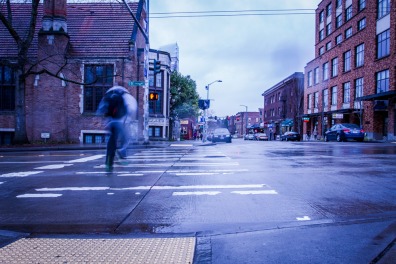
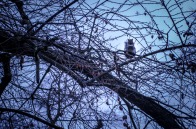
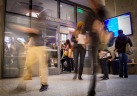
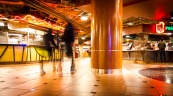
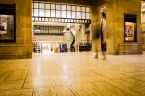
Classes are out, but the campus is still buzzing… While you were on winter break volunteering at your local food bank, visiting family, fixing grandma’s porch, or whatever else you did with your free time, many students and UW staff stuck around. The campus was largely desolate, like you might find around sunrise during the quarter, but it was far from empty; masons laid bricks on the quad, students worked in the library, and the food court in the HUB served up slices of freshly-prepared Pagliacci pizza. This photo essay attempts to capture some of the movement around campus while you were gone. Enjoy.
Your UW with the Hip-Hop Student Association
Student clubs, AKA Registered Student Organizations (RSOs), are not always worth your time or energy. That’s probably not the message you were expecting from a blog post on a university-run website, but it’s the truth. RSOs are great for meeting like-minded people, having fun, and building lasting friendships, but they also have the uncanny ability to suck more of your free time than you originally intended.
If I’ve learned one thing during my tenure at the UW, it’s that you don’t want to be so busy with extraneous commitments that you don’t have the free time to pursue meaningful opportunities. But with all that said, there are quite a few RSOs out there that are not just worth wasting your free time on, they’re worth actively pursuing.
In this mini-series, I’ll highlight some RSOs around campus that you may want to give a closer look.
The Hip-Hop Student Association (HHSA)

Chima emceeing with Nu Era. Photo courtesy of Sam Fu Instagram: @samfuphoto
The HHSA recently hosted College Hip-Hop Night, an event featuring DJ Fish Boogie and showcasing MCs, breakdancers, and dance crews from the UW and other schools around the Seattle area.
HHSA hosts three major annual events: Reign Supreme (a breakdance battle judged by world-renowned breakdancers), Fresh Fit Fashion Show (showcasing local online streetwear designers), and Hip-Hop Summit (highlighting the five elements of Hip-Hop).
The main focus of HHSA is to organize events that feature the five elements of Hip-Hop (breakdancing, MCing, DJing, graffiti, and knowledge), as well as to promote and provide support for Hip-Hop performances around Seattle.
In addition to larger events, HHSA hosts weekly classes.

Studio 3 Company practicing before their performance. Photo courtesy of Sam Fu Instagram: @samfuphoto
Monday Dance Sessions (6-9 p.m. at the Ethnic Cultural Center) offer students a chance to learn choreographed dances taught by a new guest teacher every week. “[Dancers] of all levels– people who have never danced before to people who regularly dance – can come and take classes” said UW junior Connie Hu, vice president of HHSA. In a second session directly afterward, a different dance instructor teaches a select aspect of dance which could range from popping to breakdancing.
On Tuesdays, HHSA hosts The Hip-Hop Cypher (7-9 p.m. at the Ethnic Cultural Center, Room 207), which offers advice and coaching for aspiring MCs and DJs. Instructors teach students how to write lyrics and make beats for their own songs.
Students interested in getting involved can attend weekly classes or email organization leadership at uwhhsa@gmail.com to work on a team to help organize events.
Nick Bragg is in the house with Beyond the Quad
What’s up Huskies?! My name is Nick, and I’m the newest contributor to Beyond the Quad. I’m a junior majoring in Comparative History of Ideas (CHID), with a minor in the History of Race, Gender, and Power.

Photo by Chimera Van Ornum http://www.chimerarenephotography.com/
I’m originally from a small mountain town outside of Yosemite National Park in California. I served five years of active duty in the U.S. Air Force, which has taken me all over the United States, abroad, and finally to the Pacific Northwest which I now call home.
I’ve written for The Daily and 360 News Network at the UW, and have run my own sports and fantasy sports blogs. I’m interested in baseball, photography, videography, baseball, journalism, creative writing, baseball, music, and oh yeah–baseball.
I have a wife, a house, a dog and a cat, a saxophone, a camera, glasses, a few pairs of shoes, and many other shiny things.
I’m looking forward to blogging about a bunch of stuff that I care about, some of which might even interest you. Contact me on Twitter @SeattleBragg.
Ten Things To Do Before Studying Abroad
Ten Things To Do to Prepare for Study Abroad
It is officially summer! Some students are staying in the city, soaking in the sun while taking classes or doing research. Some are headed home for a much-needed vacation. But some are leaving the States to study abroad and experience something new. Are you one of those headed off on a worldly adventure? Will you be in the future? Here are the ten things to do to prepare yourself before you’re off to your thrilling journey:
1. Learn the Basics.
![[Image by Baylor University]](http://www.baylor.edu/content/imglib/2/0/4/7/204708.jpg)
Via Baylor University
Familiarizing yourself with your host country’s etiquette, customs, and manners will mean less awkward situations for you. Remember that cultures are not the same; always be conscious of and patient with the things that are different. Learning simple words in the native language can really help your experience. Being able to say “hello,” “goodbye,” and “thank you” will go a long way! The locals appreciate the effort that you’re putting in.
2. Google Docs will be your best friend.

Via Edudemic
Having a go-to source for all your important information will be a lifesaver. Create a folder in your Google Drive titled “Study Abroad- Location, Year.” In it, include the following:
- A document with all of your important information (e.g. passport information, ID, addresses, credit card info, etc.). If you ever lose any of this information, you’ll have quick access to it with Internet access. Scanning makes things easier and more efficient in the event of a lost or stolen passport.
- Your itineraries and plans for places you hope to visit while abroad. Making a list of “Must see,” “Would like to see,” and “If there is time” will ensure that you prioritize certain sites and you don’t feel overwhelmed by worrying about missing out on certain experiences. This document is to guide you, not tell you what to do. Leave room for spontaneity.
3. Pack lightly!

Via Purse Blog
If you’re like me, it’s inevitable that you’ll end up shopping while abroad, so pack lightly. Bring shoes and clothes that you won’t miss if they get lost or stolen. When walking around your host area, bring only the essentials. In certain countries, you’ll need to be extra cautious of pick pocketing. Be wary of backpacks as it’s easy access to your valuables. Try a sturdy satchel or bag with strong handles. Position it at the front of your body for the majority of the time. Personally, I’ll be rocking a fanny pack.
4. Be cognizant.

Via Giphy
Become knowledgeable and do your research about the history and culture of your host country. Be proud to be from the country you are from and be thoughtful of the country you are in. You are a guest. Be aware of your own privileges and exercise conscious and mindful actions. Different countries view Americans in a different light; respect these perspectives.
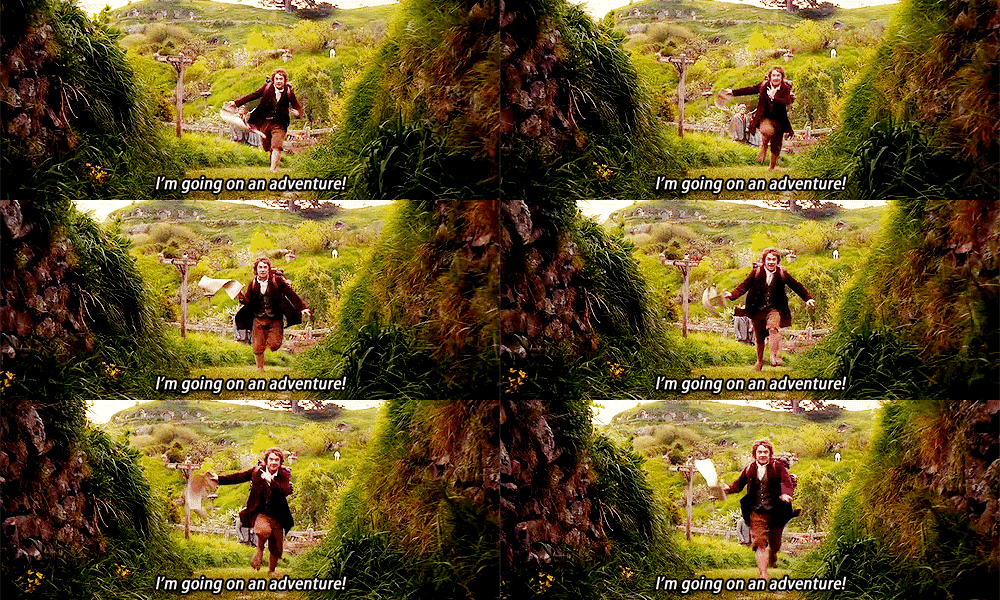
5. Get lost and ride out the imminent adventure!
Via travelmorgantravel.wordpress
Grab a buddy from your program and try to get lost. Find your way back using various forms of transportation. You will be sure to have stories to tell and peculiar observations from this!
6. Start a Travel Blog.

Via Adam Rifkin
While going on your wild adventures, be sure to document them. Updates and photos will enable your family and friends to be part of the experience. However, don’t spend so much time on this that you miss out on other experiences. It’s great to stay connected, but be sure to be in the moment. Eyes should not be glued to your laptop! And don’t dwell on what you might be missing back in the States that you see on friends’ Facebook posts. Appreciate the fantastic opportunity of being in the foreign country you are in.
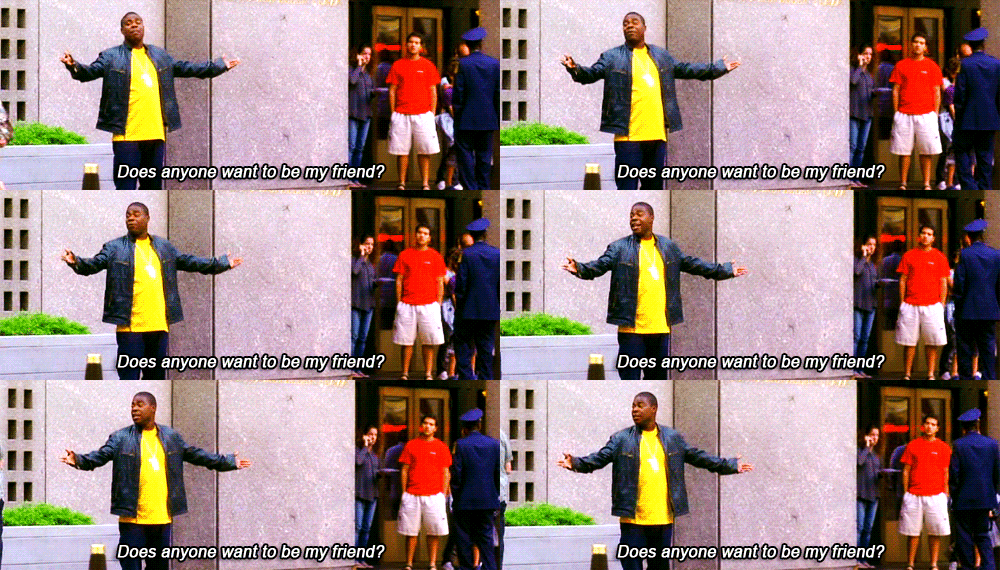
7. Go beyond the tourist experience. That’s right; immersion is key.
Via York University
Be outgoing! Interact, talk, hang out with locals and other travelers. Meeting others and sharing experiences will only enhance your time abroad. Discover restaurants or areas that locals frequent, not just the tourist hot spots!
8. Bring a signature item.
Via UW Bookstore
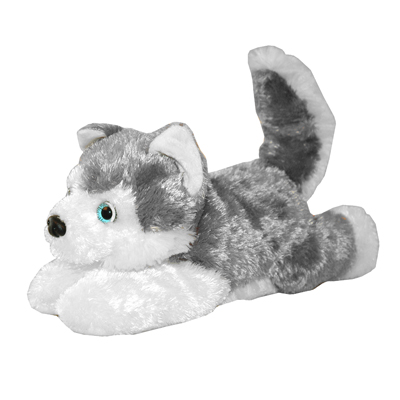
Bring a cute trinket or stuffed animal from home and take pictures of it in various areas. Continue this on future travels. You’ll end up with a photo album full of beautiful landscapes with your traveling companion. I highly suggest a UW Husky!
9. It’s the little things. . .

Via Walmart
- When buying an outlet adapter, I suggest one with a USB port.
- A wristwatch will come in handy as you become less dependent on your cell phone for the time.
- Sunscreen to protect your skin.
- Pepto-bismol chewables for possible intestinal issues.
- Hand sanitizer for convenient clean up.
- Gum/peppermint candy to keep yourself minty fresh.
- A water bottle when your thirst needs to be quenched.
- A microfiber travel towel is a huge space saver.
- Downloading a currency converter app on your smartphone can save time and money.
10. Push yourself. Just do it!

Via tumblrsavvy
Be open to doing things you wouldn’t normally do. Step out of your comfort zone. Say yes as much as possible. Explore and create great memories!
Studying abroad has provided students with a wide range of experiences: broadening their perspectives, immersing them in a foreign environment, improving moral and character development, adding skills to becoming a lifelong learner, educating them and so much more! It’s no wonder many college graduates say their most memorable experience was their study abroad.
Want to create your own adventure? Check out the UW study abroad website here. Have advice from the lessons you learned from your experience? Share them in the comments below.
Reflections of a Graduated Husky
![[Photo courtesy of Valeria Koulikova]](https://uwartsci.files.wordpress.com/2014/06/dsc_1515.jpg)
[Photo courtesy of Valeria Koulikova]
DONE! With four years and 181 credits behind me, I can finally say that I have graduated from the University of Washington. Last Monday, I marched up the stairs of the Communications Building to turn in my last exam, closing one of the biggest chapters in my life. Walking back to my car, I found myself smiling.
I always knew that I was going to college, it was just a matter of where. I was lucky enough to move to a city with one of the best universities in the country and the world. The UW was the only university I applied to and I was very happy and relieved to know that I had been accepted four years ago. But getting into the UW turned out to be the easy part compared to choosing a major.
I always wanted to study film production and was disappointed to find out that UW didn’t offer such a program. So, I decided to try cinema studies to still be connected with the world of cinema. My first course was about the director David Cronenberg. I was fascinated by the insights, themes, and revelations one can find in a single scene, but at the same appalled by some of the films that were shown. If you’ve heard of the films “They Came from Within” and “Rabid,” you know what I mean. While I continued to take cinema courses out of interest, I started to think about what I would do with a cinema studies degree. I decided to pursue something more
![[Photo courtesy of Valeria Koulikova]](https://uwartsci.files.wordpress.com/2014/06/dsc_1477.jpg)
[Photo courtesy of Valeria Koulikova]
There I was, closing in on the end of my sophomore year with no declared major. I always loved the idea of journalism but with English as my second language, I thought that I wouldn’t be able to excel in the field or even be accepted into the program. I decided that no harm could come from turning in my application and giving it a shot, and was pleasantly surprised to get the news of my acceptance with a scholarship attached. I embarked on a journey that would end with me publishing my stories at the Seattle Globalist, Seattle Times, Queen Anne & Magnolia News, and other publications. I’ve covered everything from the local Russian community to the Seattle salsa scene to the Seattle International Film Festival. It’s been exciting to learn the art of storytelling, network at various department events, and work on a research project that was then recognized by the Communications Department at the Excellence Awards. Most importantly, journalism helped me to get out of my comfort zone and realize that if you are really determined it is quite possible to reach for ambitious goals. It was hard at first but most definitely worth it.
I’m a perfectionist when it comes to grades (with a really bad case of procrastination), so I was one of those students who would bury herself in homework. I wasn’t very involved inschool life until this last year, where I started to attend drama productions, educational forums, galleries, and school-wide events such as Philanthropy Day. I also attended a UW hockey game, and would have gone to more games had I known about the Husky team earlier. One of my suggestions to current and future students is to be more active in school life and get yourself out there. You might be surprised by some of the incredible things you can find on campus.
Besides academic work, I was able to get a glimpse of how the UW operates by working first at UW Advancement and then at the College of Arts & Sciences Marketing and Communications. I got to work with some of the nicest people and co-workers I’ve ever had the pleasure to meet. I learned about the important work that these people do with alumni and donors, and how this work helps students and the University prosper. The staff have always supported and encouraged me, and I deeply appreciate all of their insights.
![[Photo courtesy of Valeria Koulikova]](https://uwartsci.files.wordpress.com/2014/06/ro2taiz9q0k.jpg)
[Photo courtesy of Valeria Koulikova]
I congratulate the class of 2014 and wish the best of luck to the upcoming seniors. And while you guys are exploring the dozens of opportunities at the UW, I will be out there following Steve Ballmer’s advice given at the commencement. I’ll make mistakes, grab opportunity after opportunity until I find the right one, and stay hardcore!

Kaci Aitchison, David Domke, and students behind the anchors’ desk at Q13 FOX studio. [Photo courtesy of UW Department of Communications]
On May 12, I was one of seven students who toured Q13 FOX News studio in Seattle. We were greeted by UW COM alumna Kaci Aitchison, former anchor and current features reporter on Q13 FOX. Aitchison started out at 106.1 KISS FM and moved to the TV realm in August 2009 when she joined the Q13 FOX News team. Since then, she’s served as the backstage host for The International, an annual Dota 2 championship (a multiplayer online battle arena hosted in Seattle), and was voted 2013 Best Local TV Personality in Western Washington in a KING 5 contest. It’s safe to say that for soon-to-be-graduates, Aitchison was a very exciting person to meet.
10 Hidden Spring Spots on Campus!
Spring has officially sprung in Seattle! For times of relaxation and lounging, what are your favorite spots around campus? The Quad is a favorite for those who like to lie under the trees, play frisbee, have a picnic, or enjoy a book. But there’s plenty more beauty that the UW campus has to offer. Here are just a few lesser known spots around campus:
- Portage Bay Vista


Located between Hitchcock Hall and William H. Foege Hall, Portage Bay Vista is an effervescent location that looks directly at Lake Washington. Surrounded by UW buildings, the vista is abundant with nature, sprawling a long grass field with a large synthetic tree trunk. Enjoy a gorgeous view with company or while having a solo snack. Pretend to be Rose and Jack with your significant other as you stand inside the bench of the tree trunk and feel like you’re on top of the world!
- Sakuma Point


Located near the Agua Verde restaurant on Boat Avenue (which has some darn good tacos), and looking over Lake Washington, Sakuma Point is a spectacular place to enjoy some food with great company. Picnic tables and benches are in no shortage in this area as you’ll be able to sit and enjoy the sparkling water. From time to time, you will see kayakers and boarders taking advantage of the lake. As an avid people watcher, this is one of my favorite spots. The area doesn’t have a shortage of ducks hanging around either!
- Beach by San Juan Road


Didn’t think there was a mini beach on campus, did you? By San Juan Road, there is an adorable beach where you can relax under the shade provided by the grand trees surrounding the area or under the sun. Skip rocks on the water, duck watch, and listen to the sounds of the waves.
- Oceanography Dock


The oceanography dock is an ideal place for a picnic! Sit down, lounge, and pretend you’re Skipper from Gilligan’s Island! Feel like a supermodel when you’re on the oceanography dock by strutting your stuff down the long walkway.
- Salmon Homing Pond area


This alluring area is right by the Salmon Homing Pond. Enjoy this gorgeous mini park by the water while smelling the beautiful lavender bushes.
- Connibear Shellhouse area


Enjoy the beautiful skies and glistening water as you sit on the three docks located by the IMA fields. This is a great place to relax and devour that post-workout protein shake after an intense workout at the gym.
- Molecular Engineering and Sciences Building and Johnson Building Plaza


Green shrubs everywhere. Juxtaposed against modern architecture, you appreciate the nature far more.
- Sylvan Grove Theater


I was first introduced to this area during my freshmen orientation, but didn’t frequent it much throughout the school year. Going back, I was mesmerized by the beautiful green landscapes and small hills. A truly great place for a picnic, chat with friends, lounge, homework session or quick nap! The beautiful pillars add a nice sense of history to the area.
- Medicinal Herb Garden


I had never been to the medicinal herb garden prior to discovering new places around campus. Located right across from the University’s Greenhouse, the herb garden is a small, intimate, and aromatic area to meditate. A calming area, this can be an ideal spot for reading or philosophizing the world’s most complicated concepts.
- Mark McDermott Plaza


Between the Physics Astronomy buildings, this plaza has an elevated look of Lake Washington. With the planetarium and pendulum within walking distance of the plaza, this place is an ideal spot for meeting friends or taking visitors.
Did your favorite hot spot make it on the list? If not, tell us about yours!
SPAN 449: A Drama Class without Borders
![Rosita and Cocolichio [Photo by Valeria Koulikova]](https://uwartsci.files.wordpress.com/2014/03/dsc_0625.jpg)
Rosita and Cocoliche [Photo by Valeria Koulikova]
The Billy-Club Puppets (Los titeres de Cachiporra) was originally written for puppet theater. The story follows a young girl, Rosita, who is in love with charismatic but poor Cocoliche. Rosita’s father tells her to get married to help with the family’s finances. However, to Rosita’s horror, it wasn’t Cocoliche she was expected to marry but the ugly, fat, billy-club wielding Don Cristobita. To make poor Rosita’s life even more complicated, an old love, Currito, turns up in town to take her back. Among all the commotion with Rosita’s juggling her three admirers, drunken bar fights, and random poems and dancing, the barber giving Don Cristobita a haircut reveals that Cristobita is simply a puppet! Though it was already too late because Rosita had already married him while – wait for it – Cocoliche and Currito were hiding in her bedroom’s closets. When Cristobita blows up out of rage after finding out about the two lovers, Rosita and Cocoliche happily get back together.
The Art and Science of the UW Cherry Blossoms
![The Quad's Cherry Blossoms [Photo by Valeria Koulikova]](https://uwartsci.files.wordpress.com/2014/03/8.jpg)
The Quad’s Cherry Blossoms [Photo by Valeria Koulikova]
While the festive mood is still occupying the campus and we are waiting for the nature to fully embrace the spring and color the streets, let’s take a look at some fun facts about the gorgeous cherry trees.


 UW College of Arts & Sciences :: Beyond the Quad